At some point, almost everyone has pulled a load from the washer, and the water has turned murky with dye. Was it the detergent? The temperature? That one item you weren’t sure about? The urge to fix it immediately is understandable. But not every solution works the way you’d expect.
Color bleed feels urgent because it is. Heat, time, and the wrong next step can quietly lock dye into fabric. Once dye has moved, every choice carries weight. Read on to understand what to do first, what to avoid, and when it’s time to bring in expert help.
The moment you realize color has bled, drying needs to stop immediately. Even low heat can permanently set transferred dye into surrounding fibers, turning a fixable issue into a lasting stain. If the garments are still wet, there’s still flexibility in how the situation can be handled.
Once color transfer is complete, the dye bonds tightly to the fabric fibers. At that point, even professional correction becomes more limited.
Wet fibers remain open and flexible, making it easier to release unwanted dye. Drying closes that window fast.
Letting color-bled clothes sit wet for hours, especially piled together, allows dye to continue to migrate.
In professional Wash and Fold Laundry Service settings, stopping heat exposure is the first rule of color correction. The same rule applies at home.
With the dryer out of the picture, separating the items is the next priority. Leaving everything together, even for a short time, can cause more dye transfer than the original wash cycle did. Separating the items stops the issue from spreading while you determine next steps.
Items that bleed once may continue to bleed, especially while wet.
Whites, pastels, and natural fibers act like sponges when exposed to loose dye.
Cotton and linen grab color faster than synthetics, which is why mixed piles are risky.
Laundry service professionals treat separation as a damage-control measure. At home, doing this immediately can stop a bad situation from spreading.
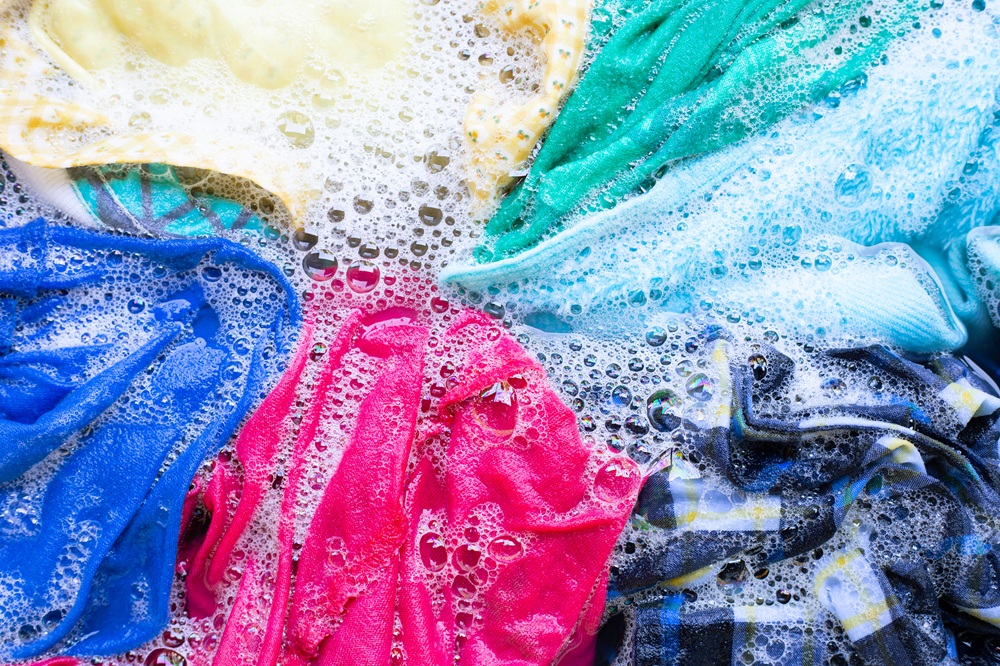
At this stage, you want to reduce loose dye while avoiding anything that could worsen bleeding. It’s easy to overcorrect at this stage, and that usually backfires. It feels logical to reach for hot water or stronger products, but that usually makes the bleeding worse.
Cold water keeps fabric fibers tighter, which helps prevent dye from embedding deeper. Hot water, on the other hand, opens fibers and gives stray dye more places to settle. When dealing with color bleed, gentler conditions almost always produce better results.
This approach mirrors how professional laundry service teams handle early-stage color correction – slow, controlled, and fabric-aware.
When panic sets in, the internet becomes tempting and dangerous. Bleach, vinegar, baking soda, salt, and heat-based methods are often recommended, without context. Once dye sets into the fabric, it becomes far more difficult to remove.
Most home remedies don’t distinguish between original fabric dye and transferred dye. Rather than removing the stain, these methods can fade or alter the original color. Laundry professionals avoid untested fixes for a reason. Damage from at-home attempts is often what makes a garment impossible to save.
Doing nothing for a short time, while keeping garments damp, is often safer than trying everything at once.
If the color bleeding isn’t improving, especially on a valuable garment, a professional is often your best next step. Timing often determines how much improvement is possible.
A laundry service can evaluate:
Professionals choose the least damaging option based on what the fabric can handle. For uniforms, specialty items, or sentimental pieces, that kind of precision really counts.
The proper care at the right time can stop color bleed from becoming permanent and save you hours of frustration and rewashing. At Sunny Cleaners, we do your laundry for you with our professional Wash and Fold Laundry Servicethat delivers fresh, neatly folded clothes and home essentials.
Instead of stressing over another load, let our team handle everything, from everyday wear and work clothes to towels, sheets, and active gear. Acting quickly matters because the sooner color issues are treated, the better the results and the more damage you avoid.
Trade laundry day for a better day! Schedule your FREE Pickup and Delivery Service with Sunny Cleaners nowand get back your time with confidence.
Call: (843) 399-8550